
Michigan Police Records
Michigan police records are public documents held by the Michigan State Police, county sheriff offices, and local departments across all 83 counties. These records include incident reports, arrest records, accident reports, booking information, and more. You can search Michigan police records through state online portals, direct agency contact, or a written FOIA request. This guide walks you through every method available so you can find and access the records you need quickly.
Michigan Police Records at a Glance
What Michigan Police Records Include
Michigan police records cover a wide range of documents created by law enforcement agencies at the state, county, and city level. The type of record you can get depends on which agency handled the case, the nature of the incident, and how long ago it happened. Most records are open to the public once a case is closed or charges are filed. Some records remain restricted while an investigation is ongoing.
The most common types of Michigan police records include incident reports, which are filed any time an officer responds to a call and documents what took place. Arrest records show booking details, charges, and release information. Traffic crash reports, filed on the UD-10 form, document vehicle accidents investigated by law enforcement. Jail and inmate records track booking, bond, and release status for people held in county facilities.
Other records you may request include warrant information, 911 dispatch logs, background check results, and criminal history records. Not all of these come from the same agency. Statewide criminal history records are held by the Michigan State Police. County arrest and incident records are kept by each sheriff office. City or township police departments maintain their own separate records.
Juvenile records are restricted. Under Michigan law, records involving minors are generally sealed or limited in access. This applies to incident reports, arrest records, and court documents where the subject was under 17 at the time. Requests for these records are rarely granted without a court order.
Note: Active criminal investigation records are often withheld until the case closes. If your request is denied, ask the agency to specify which exemption applies under Michigan FOIA.
How to Search Michigan Police Records Online
Michigan has several tools that let you search police records online at no cost or a small fee. The right tool depends on what you are looking for.
The Internet Criminal History Access Tool, known as ICHAT, is the main state database for criminal history records. It is run by the Michigan State Police and covers felonies and serious misdemeanors punishable by more than 93 days in jail from all 83 counties. The fee is $10 per search and requires a credit card. ICHAT does not include traffic offenses, juvenile records, federal records, or records from other states. You can access ICHAT at michigan.gov/msp/services/ichat.
The Michigan State Police website is also the central hub for other statewide record tools. You can find information on how to submit FOIA requests to the MSP, purchase traffic crash reports, and access the sex offender registry all from one place.
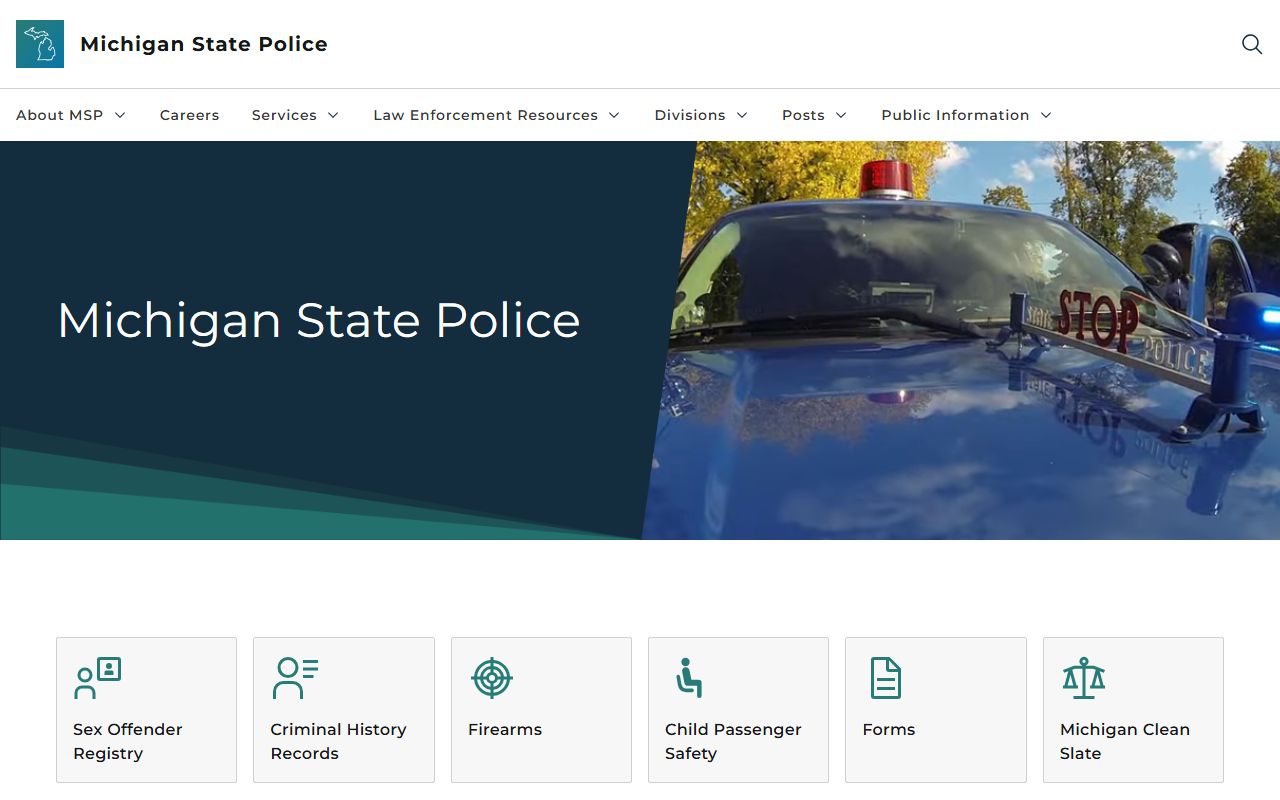
The MSP homepage gives access to ICHAT, FOIA submission tools, and the Traffic Crash Purchasing System. Start there if you need state-level police records or criminal history checks.
The Michigan Courts Case Search is a separate but related tool. It covers court records from district, circuit, and appellate courts across the state. You can search by name or case number and see charges filed, hearing dates, and case dispositions. Court records are free to search online and complement police records well.
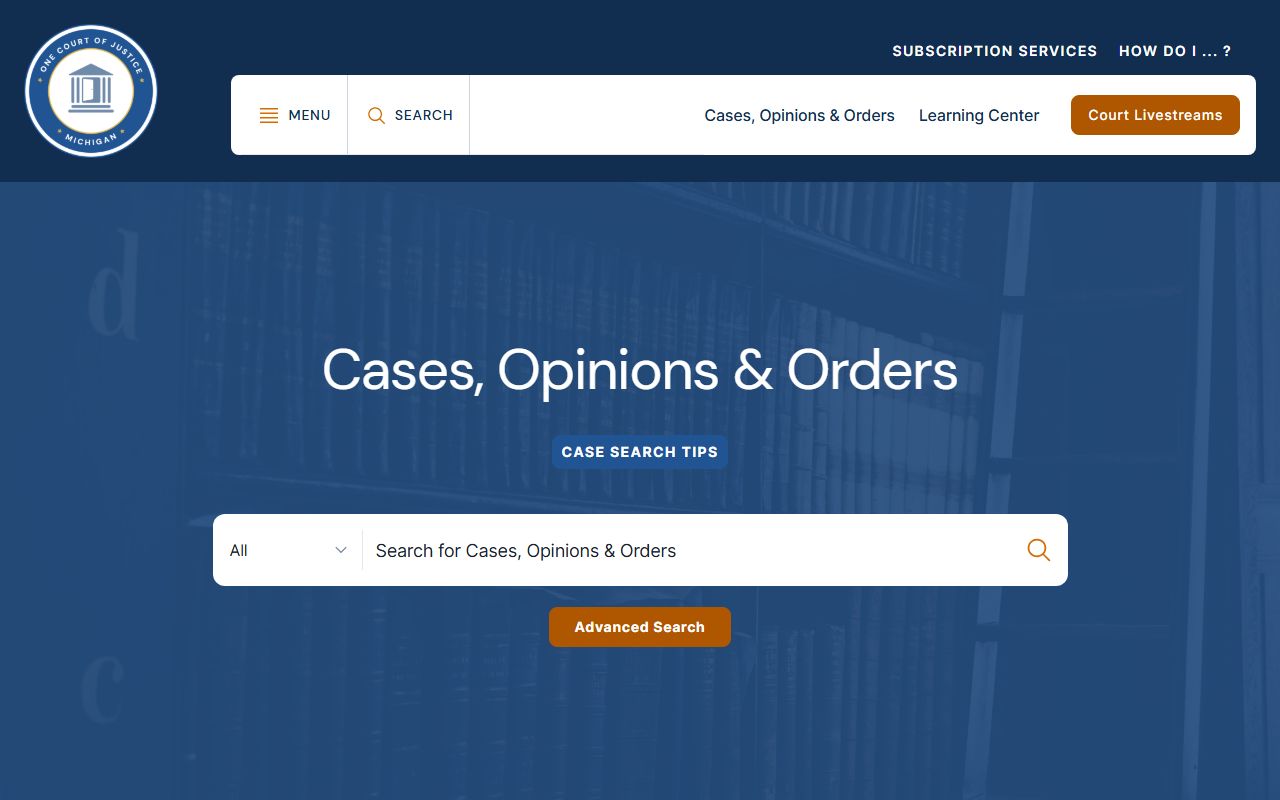
Court case records are a useful companion to police records when you need to see how an arrest or incident was handled through the courts. Search by name, case number, or date range.
Accident Reports and Traffic Crash Records
Accident reports in Michigan are filed on a standard UD-10 form. The responding officer completes this form at the scene or shortly after any reportable crash. These reports are used by insurance companies, attorneys, and involved parties to document what happened.
The Michigan Traffic Crash Purchasing System handles state-archived crash reports. This system is run by the MSP and is the official source for UD-10 records. Involved parties, insurers, and attorneys can purchase reports through the portal at michigan.gov/msp/services/traffic-crash-purchasing-system. There is a fee to buy reports through this system.
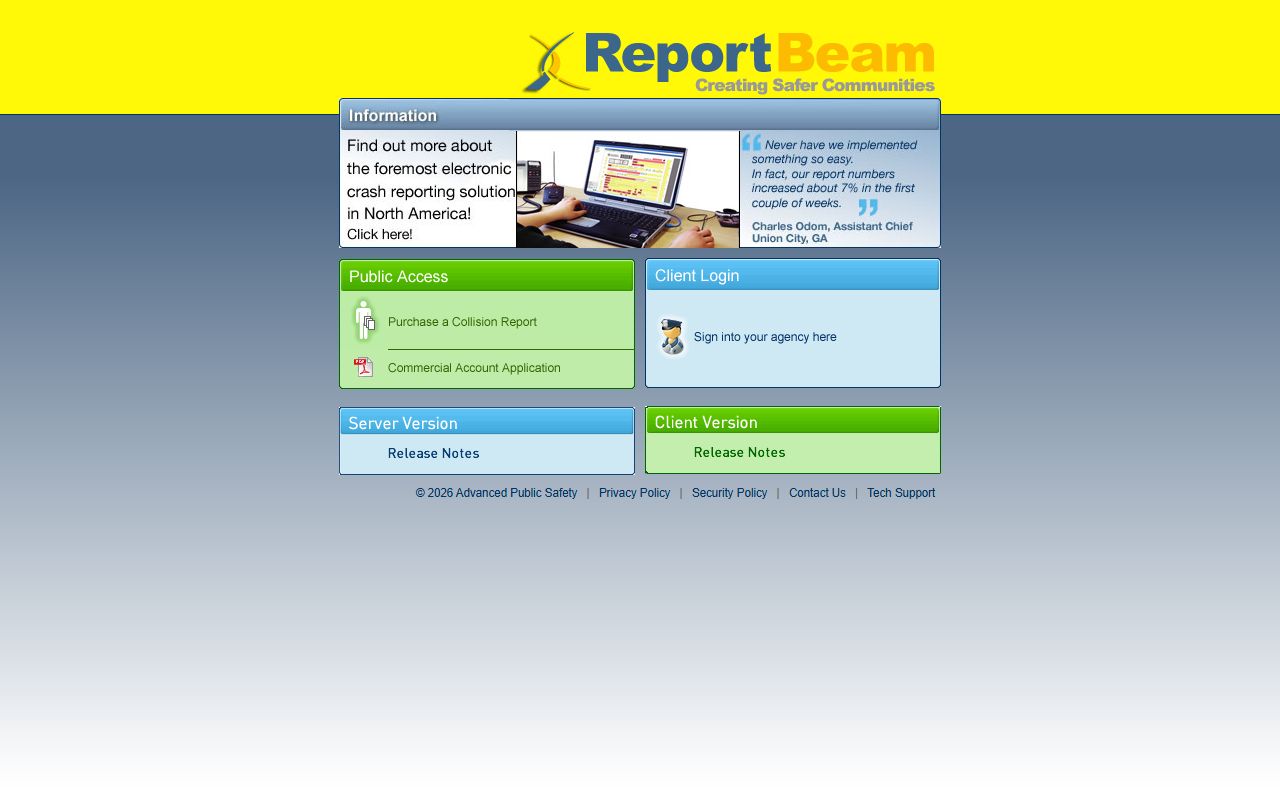
Third-party services like ReportBeam at reportbeam.com and LexisNexis BuyCrash at buycrash.lexisnexisrisk.com provide another option for obtaining Michigan accident reports. Many county and city agencies direct requesters to these services for faster access to crash records. Reports are typically available 7 to 10 days after the incident.
For crashes handled by a local agency rather than the MSP, contact the responding department directly. Most city and county agencies will release accident reports through a FOIA request or, in some cases, over the counter with proper identification. Bay County, for example, requires a release form for motor vehicle crash reports requested within 30 days of the incident.
Filing a FOIA Request for Michigan Police Records
Michigan's Freedom of Information Act, found at MCL § 15.231 et seq. and enacted as Public Act 442 of 1976, gives every person the right to request records from government agencies. This includes police reports, arrest records, dispatch logs, and other law enforcement documents. You do not need to give a reason. No residency requirement applies. Anyone can file a request.
A FOIA request must be in writing. Describe the records you want clearly enough that the agency can find them. Include your full name, mailing address, and contact information. Add the date range, names involved, and any case or incident number you have. The more detail you provide, the faster the agency can process your request.
The Michigan State Police accepts FOIA requests online through its records portal, by email at MSPRecords@michigan.gov, by fax at (517) 241-1935, or by mail to MSP, ATTN: FOIA Coordinator, P.O. Box 30634, Lansing, MI 48909. The MSP handles roughly 22,000 FOIA requests each year. Its FOIA Coordinator is listed as Lori Hinkley, Public Records Manager.
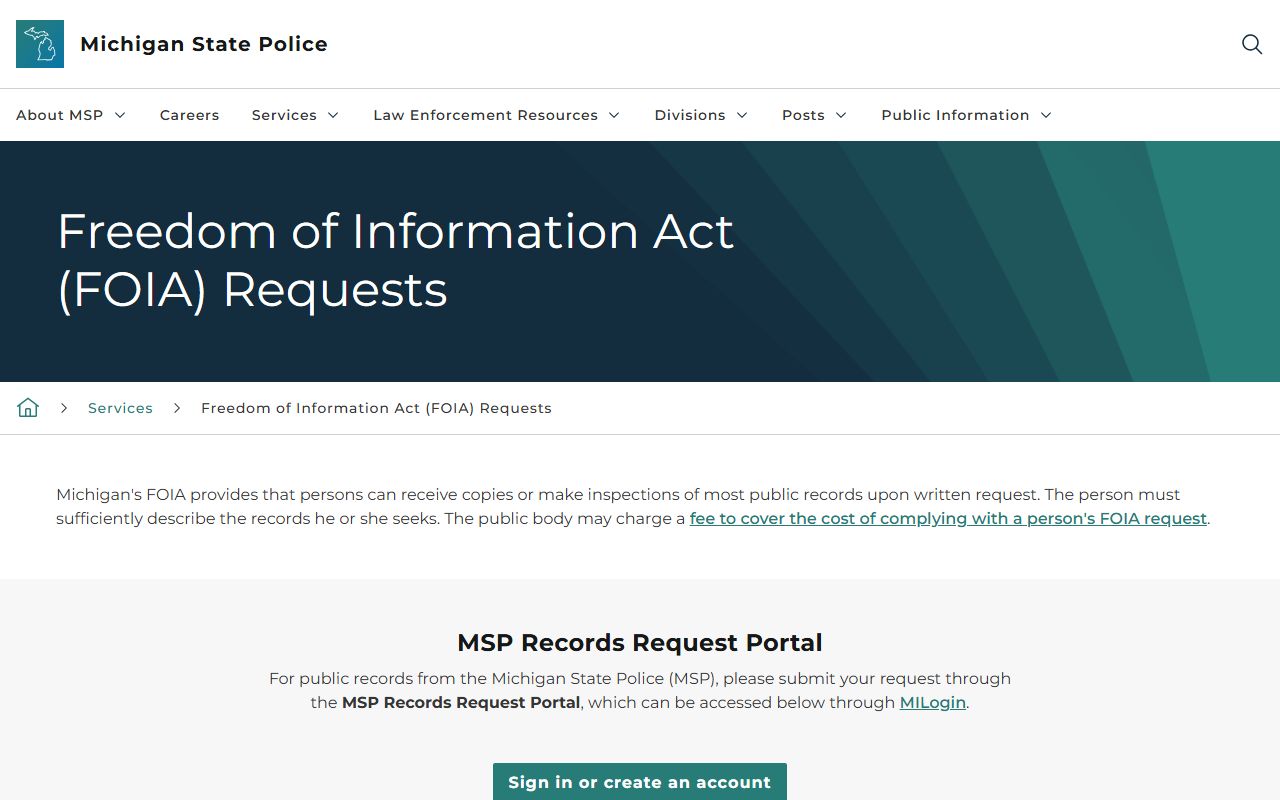
The MSP FOIA page at michigan.gov/msp/services/foia outlines the full process for requesting state police records. The online portal lets you submit, track, and pay for requests in one place.
County-level FOIA requests go to the sheriff office or county clerk depending on what records you need. City-level requests go to the local police department's records division. Each agency sets its own process within the rules set by state law. Some counties and cities have online portals. Others only accept written requests by mail, fax, or in person.
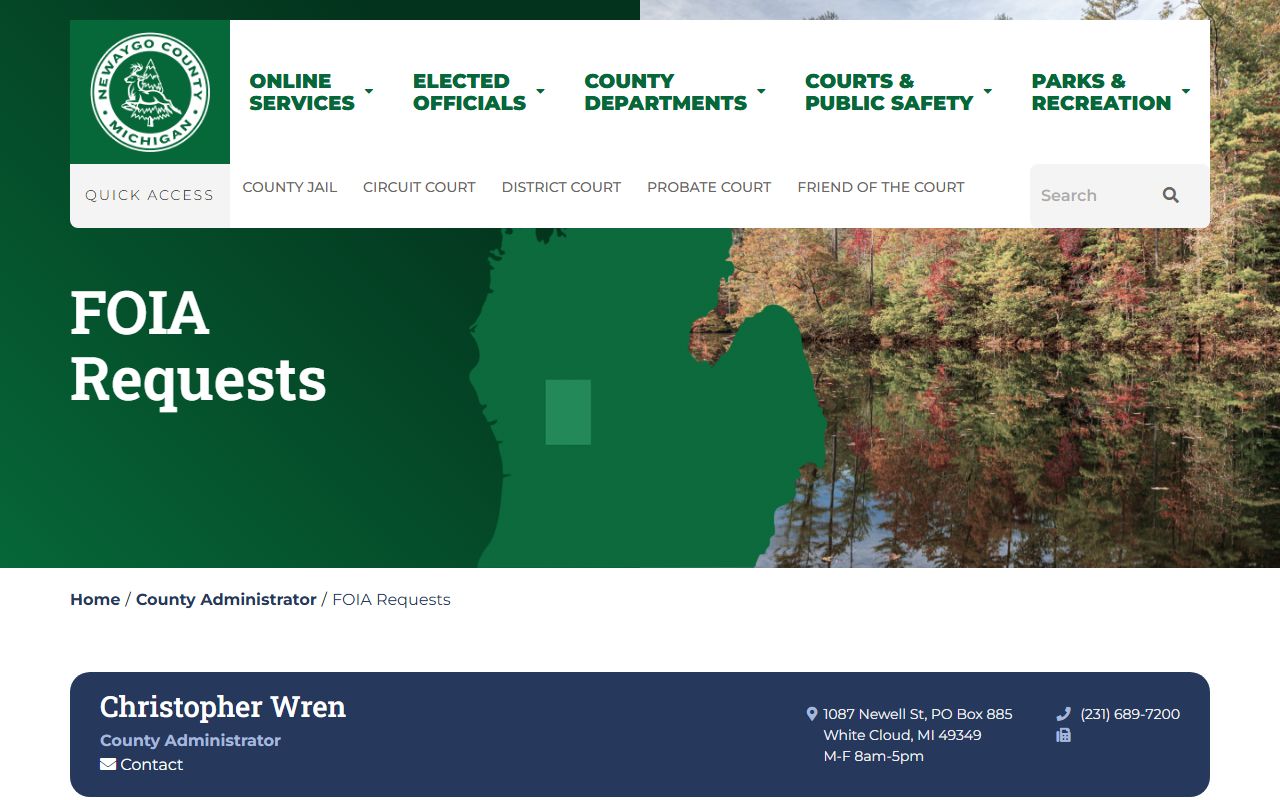
County FOIA portals like Newaygo County's allow residents to submit requests electronically and track status online. Not all counties offer this. Check your county's government website to find its specific FOIA submission options.
Under MCL § 15.235, agencies must respond within 5 business days of receiving a written request. They may extend this by up to 10 additional business days by sending written notice explaining the reason. Email and fax requests are considered received on the next business day after transmission.
Police Record Fees in Michigan
Michigan law controls how much agencies can charge for police records. Under MCL § 15.234, the standard copy fee is $0.10 per page for letter or legal size paper. For non-standard sizes or digital media, agencies charge actual cost. Labor is billed at the hourly rate of the lowest-paid employee who can handle the task, including up to 50% of that wage for fringe benefits. Labor is charged in 15-minute increments with nothing charged for searches under 15 minutes.
If the estimated fee exceeds $50, the agency can ask for a 50% deposit before it starts work. If you had a prior request you did not pay for, they can require full payment in advance. Fee estimates are good for 45 days. If you do not pay the deposit in time, the agency may close your request.
Low-income requesters can apply for a fee waiver. Michigan provides a $20 indigency discount each time you submit an affidavit showing you receive public assistance or cannot afford to pay. You can claim this up to twice per calendar year. You cannot claim it if you are making the request for a third party who is paying you.
Some agencies charge flat fees for certain records. Barry County and Bay County both charge $22.00 for incident or accident reports. Berrien County charges $10 for records checks per individual and $0.25 per page for copies. The MSP charges a $2.00 processing fee for online payments. Always ask for a fee estimate before a large request.
Note: Fees vary by agency. Some cities and counties set their own rates within state limits. Contact the specific agency before submitting a large or complex request to get a cost estimate.
Other Michigan Police Record Databases
Michigan maintains several additional public databases that complement police record searches. The Michigan Public Sex Offender Registry lists individuals required to register under state law. It is free to search at mipsor.state.mi.us. You can look up records by name, county, or address.
The Michigan Offender Tracking Information System, known as OTIS, covers people currently in state prison or on parole or probation. It is maintained by the Michigan Department of Corrections and is free to use at mdocweb.state.mi.us/OTIS2/otis2.aspx. County jail inmate records are separate from OTIS and must be requested from each local facility.
The Michigan Attorney General offers FOIA guidance and resources for people who have questions about their rights or want to challenge a denial. Their FOIA resources page is at michigan.gov/ag/foia. If you believe an agency has wrongly denied your request or charged improper fees, the AG's office is a good place to start.
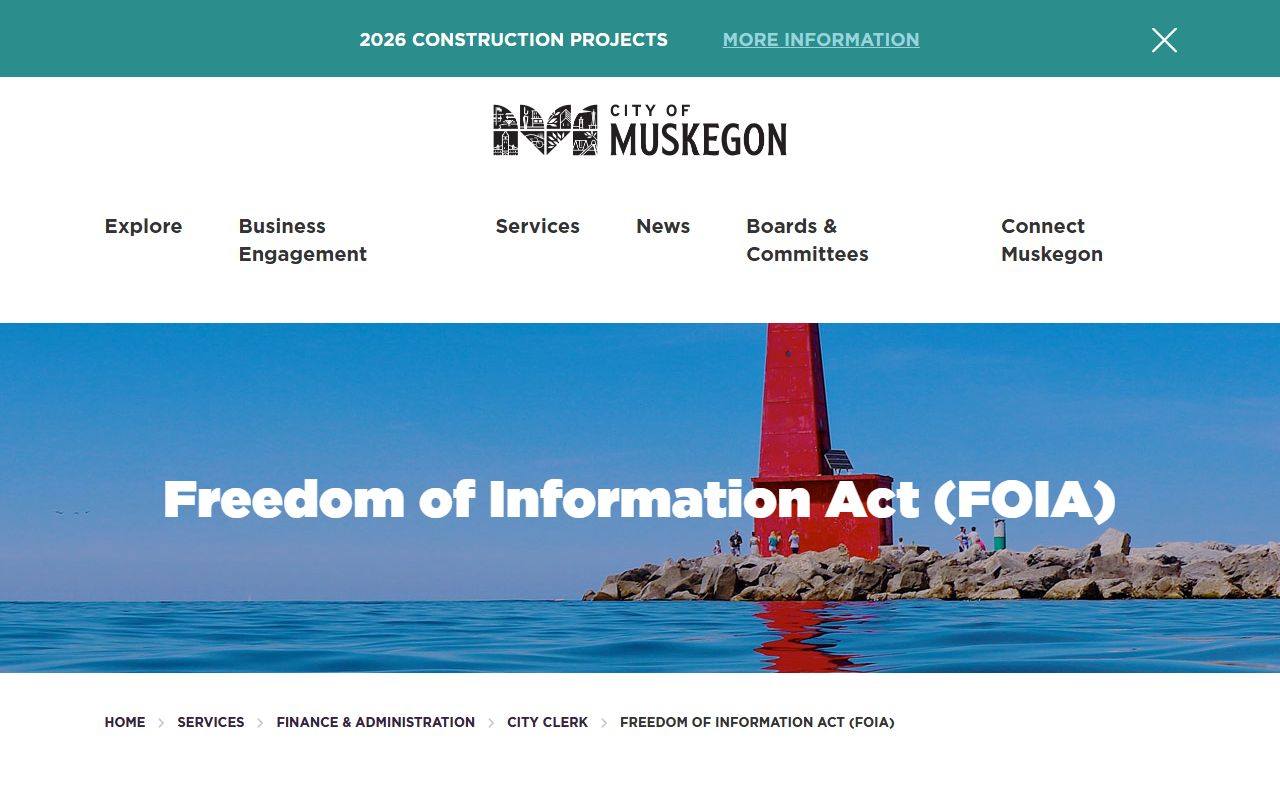
Cities like Muskegon have dedicated FOIA pages for local records requests. Each city handles police records independently, so the process and fees may differ from the county or state level.
For court records that go beyond what Michigan Courts Case Search provides, the Michigan Attorney General's office and individual circuit court clerks can assist with certified copies of court documents. Many county courthouses also have public access terminals for on-site record lookups.
When Police Records Can Be Withheld
Not every police record is open to the public. MCL § 15.243 lists the exemptions that allow agencies to withhold records under Michigan FOIA. The most common one for police records is the active investigation exemption. If releasing a record would interfere with an ongoing case, the agency can deny access until the investigation closes.
Other exemptions include personal privacy protections covering Social Security numbers, home addresses in certain contexts, and medical information. Records identifying confidential informants are withheld to protect safety. Records that could endanger a person's life or safety are also exempt. Attorney-client privileged communications and preliminary internal documents used for policy discussion are generally off limits as well.
When an agency denies a FOIA request, it must tell you in writing which exemption applies and why. You can appeal the denial in writing within 180 days. The appeal goes to the head of the agency or, for a county, to the board of commissioners. If the appeal is denied, you can file a civil action in the circuit court. Under Michigan law, if a court finds the denial was wrongful, the requester may recover attorney fees and other costs.
Browse Michigan Police Records by County
Every county in Michigan has its own sheriff office that keeps local police records. Find your county below to see contact information, FOIA details, and how to request records in that area.
Michigan Police Records by City
Major Michigan cities have their own police departments and maintain their own records separately from the county sheriff. Select a city below to learn how to request police records in that area.